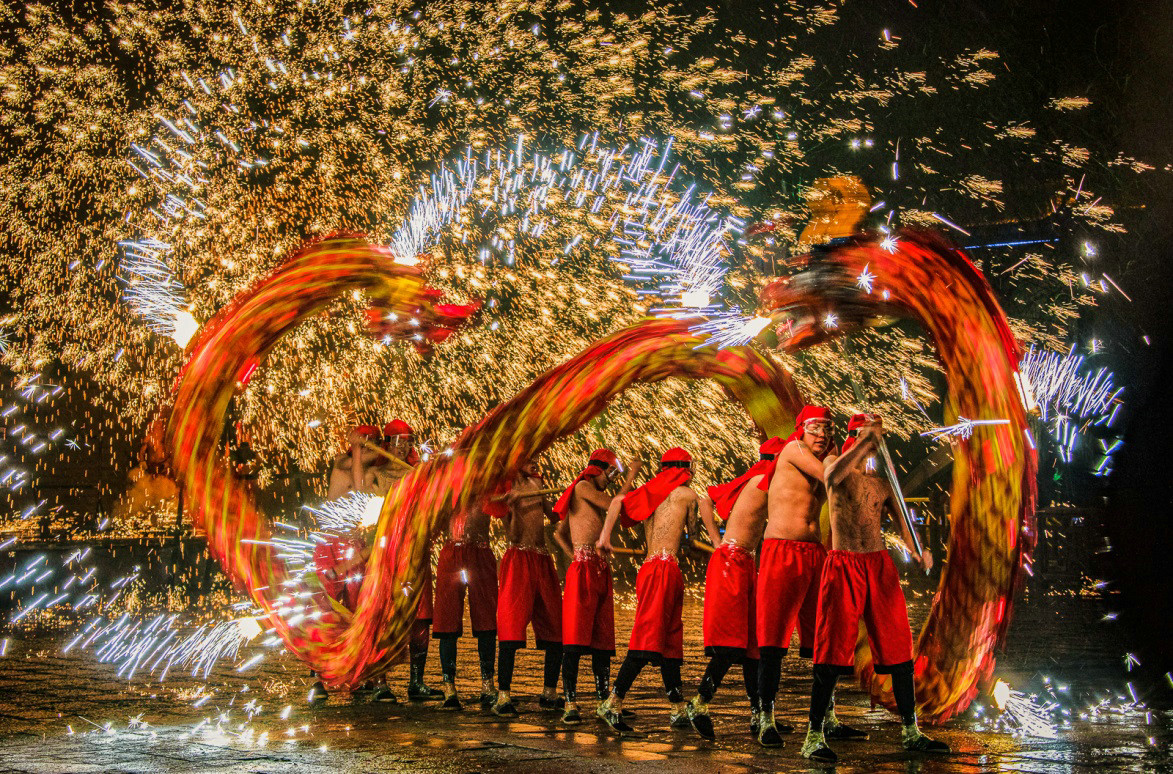
Fire Dragon Dance
Overview
The Fire Dragon Dance is a captivating and vibrant traditional performance that holds significant cultural importance in Chinese communities. This dance, characterized by its dynamic movements and elaborate costumes, is often performed during festivals and special occasions, particularly the Lantern Festival. The tradition of the Fire Dragon Dance is deeply embedded in the cultural fabric of regions like Meizhou in Guangdong province, where it is celebrated with great enthusiasm and reverence.
Historical Background
The origins of the Fire Dragon Dance can be traced back to the Qing Dynasty (1644-1911), a period during which the dance began to gain prominence in Chinese culture. It is especially associated with the Lantern Festival, where the streets come alive with festivities, and the dance plays a central role.
The dance involves a long dragon, approximately 35 meters in length, which can perform various movements, including opening its mouth, bending its body, shaking its tail, and even spitting fire and balls during the performance. The spectacle is a communal effort, often requiring about 100 strong men to bring the dragon to life, highlighting the dance's communal and cooperative essence.
Performance Elements
The preparation and execution of the Fire Dragon Dance involve meticulous planning and coordination. The dragon itself is crafted with intricate details, often made from materials that can withstand the rigors of the dance, including its fire-spitting feature. The performers are usually seasoned dancers who have trained specifically for this demanding role, ensuring every movement is executed with precision and grace.
Music plays a crucial role in the Fire Dragon Dance, with traditional instruments like drums and cymbals providing a rhythmic backdrop that guides the dragon's movements. The synchronization between the musicians and the dancers is vital, creating a harmonious and awe-inspiring performance that captivates audiences.
Cultural Significance
The Fire Dragon Dance is not just a performance but a symbolic act believed to ward off evil spirits and bring good fortune to the community. The dragon, a revered creature in Chinese mythology, is seen as a symbol of power, strength and good luck. The dance is both a celebration of these cultural ideals and a reminder of the historical traditions passed down through generations.
In Meizhou, the Fire Dragon Dance is a focal point of the Lantern Festival, drawing crowds from various regions to witness its grandeur. The performance is a testament to the community's dedication to preserving their intangible cultural heritage, an aspect of culture that is recognized and celebrated at both national and local levels.
Modern Adaptations and Preservation
In recent years, efforts have been made to adapt and preserve the Fire Dragon Dance in the face of modernization and cultural shifts. These efforts include introducing the dance to younger generations through educational programs and community workshops. Additionally, the dance has been incorporated into various cultural festivals and events, both within China and internationally, showcasing its universal appeal and cultural richness.
Organizations and cultural groups are actively involved in recording and documenting the dance, ensuring that its techniques and significance are preserved for future generations. These initiatives not only safeguard the dance's traditional aspects but also allow for creative adaptations that can keep the tradition alive in a contemporary context. Article reference1. Meizhou cultural performances highlight first Cultural and Natural Heritage Day. chinadaily.com.cn. 2017Photo Gallery(11 pictures)CategoriesCultural HeritageTagIntangible Cultural HeritageChinese DanceCatalogue1. Overview2. Historical Background3. Performance Elements4. Cultural Significance5. Modern Adaptations and Preservation- - - []








